
Dorm Room Bedding Checklist 2026
Move-in day is exciting, but it can also be messy, rushed, and stressful. Between carrying boxes, meeting a roommate, setting up a small space, and figuring out shared laundry, bedding is one of the easiest things to overlook.
A good dorm room bedding setup should be simple, comfortable, easy to wash, and flexible enough for changing dorm temperatures. You do not need to bring every cozy item from home. You need the basics that actually make dorm life easier: sheets that fit, a lightweight comforter, a soft throw blanket, fresh pillowcases, and a few practical layers that help a small room feel more personal.
This dorm room bedding checklist is designed for real college living, not an oversized shopping list.
Before You Buy: Check the Dorm Bed Size
Most U.S. College dorm beds use Twin XL mattresses, which are longer than standard Twin mattresses. A standard Twin fitted sheet may look close at first, but it can pull loose at the bottom of the bed and bunch up while you sleep.
Before buying college bedding, check your school’s Housing or Residence Life page for the exact mattress size. If your school does not clearly list the size, Twin XL bedding is usually the safest choice for U.S. dorm rooms.
If you plan to add a mattress protector or mattress topper, choose fitted sheets with enough pocket depth so they stay secure.
Dorm Room Bedding Checklist
| Bedding Item | Priority | Why It Matters |
| Twin XL sheet set | Essential | Fits most college dorm mattresses |
| Second sheet set | Highly recommended | Makes shared laundry easier |
| Lightweight comforter | Essential | Works as the main sleeping layer |
| Throw blanket | Highly recommended | Useful for studying, naps, and cold rooms |
| Pillowcases | Essential | Easy to change between laundry days |
| Backrest pillow | Optional but useful | Makes the bed better for studying and relaxing |
| Mattress protector | Essential | Adds a cleaner layer over a shared dorm mattress |
| Too many decorative pillows | Skip | Takes up space and usually ends up on the floor |
| Oversized heavy blanket | Skip | Hard to wash, store, and use on a small bed |
1. Start With Twin XL Sheets
Sheets are the foundation of a dorm bed. If they do not fit properly, the rest of the bedding will feel frustrating, no matter how soft it is.
For most college students, Twin XL sheets are the right place to start. They are designed for the longer dorm mattress size and help prevent the fitted sheet from slipping off during the night.
It is also smart to bring two sheet sets. Shared laundry rooms can be busy, and dryers do not always finish everything quickly. Having one clean backup set means you can remake your bed even when laundry takes longer than expected.
2. Choose a Lightweight Comforter

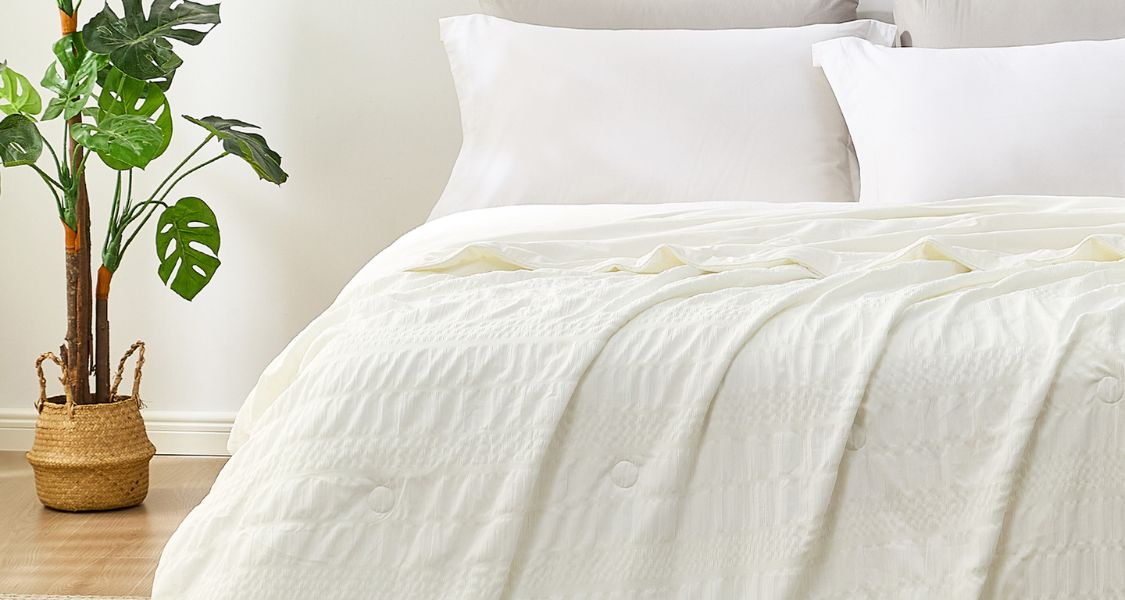
A dorm comforter should feel cozy without becoming too bulky. Dorm rooms can be unpredictable: some are warm in August and September, while others get chilly when air conditioning or heating turns on.
A lightweight comforter or an all-season comforter is usually more practical than a heavy winter comforter. It gives enough coverage for everyday sleep and can be layered with a throw blanket when extra warmth is needed.
Avoid oversized comforters that drag on the floor or take up too much washer space. In a small dorm room, bedding should be comfortable but still easy to manage.
3. Add a Throw Blanket for Daily Use

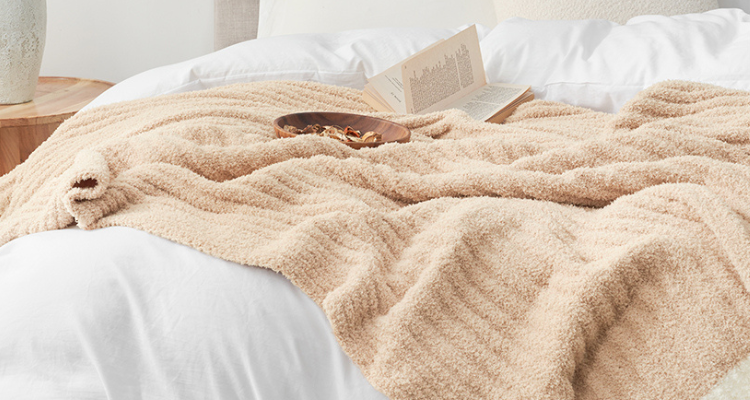
A throw blanket is one of the most useful dorm bedding items. It is not just decorative. Students often use it while studying, watching a movie, taking a nap, sitting at a desk, or adding an extra layer on colder nights.
A 50 x 60-inch throw blanket is usually large enough for one person but compact enough for dorm storage. It can be folded at the foot of the bed, draped over a desk chair, or kept nearby for late-night study sessions.
For a small space, a soft throw blanket also adds personality without taking up much room. It is one of the easiest ways to make a dorm bed feel warmer and more like home.
4. Bring Extra Pillowcases

Pillowcases are easy to forget, but they matter in a dorm room. Late nights, skincare, hair products, snacks, and shared spaces can make pillowcases feel less fresh faster than expected.
Bring at least one extra pillowcase, even if your sheet set already includes one. It is one of the simplest ways to keep your sleep area cleaner between full laundry days.
5. Consider a Backrest Pillow
A dorm bed often becomes more than a bed. It may also be a study spot, reading corner, movie seat, or the main place to relax.
A backrest pillow can make sitting on the bed more comfortable, especially if there is not enough space for an extra chair. It is useful for students who read, use a laptop, or watch shows from bed.
This is not an absolute must-have, but for many students, it becomes one of the most practical comfort pieces in the room.
6. Do Not Skip a Mattress Protector
A mattress protector is not the most exciting item on the checklist, but it is one of the most practical. Dorm mattresses are used by many students over multiple years, so a mattress protector adds a cleaner layer between you and the mattress.
Choose one that fits Twin XL, stays secure, and does not make too much noise when you move. If you are using a topper, make sure the protector and fitted sheet can still fit properly.
7. What to Skip for a Dorm Room
Dorm rooms are small, and storage fills up quickly. It is better to bring fewer items that you actually use than too many pieces that create clutter.
You can usually skip:
1. Too many decorative pillows
2. Very heavy blankets that are hard to wash
3. Oversized bedding that hangs onto the floor
4. Delicate bedding that needs special care
5. Extra layers with no clear purpose
A dorm bed should feel cozy, but it should also be easy to clean and reset.
8. How to Make a Dorm Bed Feel Cozy
A dorm room is not only for sleeping. It is also where students study, relax, call home, and spend quiet time between classes. The bed often becomes the center of the room.
To make it feel cozy without overpacking, start with fitted sheets that actually fit. Add a lightweight comforter, fold a throw blanket at the foot of the bed, and keep extra pillowcases nearby. If you study in bed, add a backrest pillow for support.
The CDC recommends keeping a sleep environment quiet, relaxing, and cool as part of healthy sleep habits. In a dorm room, students may not control every part of the environment, but breathable bedding and flexible layers can still help create a more comfortable place to rest.
9. Laundry Tips for Dorm Bedding

Shared laundry is one of the biggest differences between home and college living. Bedding that is easy to wash will make dorm life much easier.
Follow the care label on each item, wash bedding regularly, and avoid overloading shared machines. The American Cleaning Institute recommends checking fabric care symbols and using the right laundry routine to help textiles last longer.
A second sheet set, extra pillowcase, and easy-care throw blanket can reduce stress when laundry rooms are busy.
Product Fit: SnuggleSac Dorm Bedding Essentials
SnuggleSac bedding is a good fit for students who want softness, comfort, and practical everyday use. A lightweight comforter can make a Twin XL bed feel more inviting. A cozy throw blanket adds warmth and personality without taking up much space. Extra pillowcases help keep the bed fresh, and a backrest pillow can turn the bed into a more comfortable place to study or relax.
For back-to-school season, start with the pieces you will use every day: sheets, a comforter, pillowcases, a mattress protector, and one soft throw blanket. Then add comfort pieces based on how you actually live in the room.
For families who care about textile safety, OEKO-TEX® STANDARD 100 is also a useful certification to understand because it tests textiles for harmful substances.
Final Thoughts
The best dorm bedding is not the biggest set or the most expensive one. It is bedding that fits the mattress, feels comfortable every night, washes easily, and helps a small room feel more like home.
For college students, comfort matters. A simple setup with properly sized sheets, a lightweight comforter, a cozy throw blanket, fresh pillowcases, and a mattress protector can make move-in day easier and dorm life much more comfortable.
FAQ
1. What bedding do I need for a college dorm?
Most students need Twin XL sheets, a second sheet set, a lightweight comforter, pillowcases, a mattress protector, and a throw blanket. A backrest pillow is also helpful if you study or relax on your bed.
2. Do dorm beds need Twin XL sheets?
Most U.S. college dorm beds use Twin XL mattresses, but you should always check your school’s housing page before buying. Twin XL sheets are usually the safest choice for college bedding.
3. Should I bring a throw blanket to college?
Yes. A throw blanket is very useful in a dorm room. It can be used for studying, naps, movie nights, cold rooms, or as an extra layer at the foot of the bed.
4 . What comforter is best for a dorm room?
A lightweight comforter or an all-season comforter is usually best. It is easier to manage in a small room and can be layered with a throw blanket when needed.
5. How many sheet sets should I bring to college?
Two sheet sets are recommended. Shared laundry can be unpredictable, and having a clean backup set makes dorm life easier.
6. Is a mattress protector necessary for college?
Yes. A mattress protector adds a cleaner layer over a shared dorm mattress and helps make the bed feel more comfortable and personal.
7. How can I make my dorm bed feel cozy?
Use fitted sheets that stay in place, add a soft comforter, fold a cozy throw blanket at the foot of the bed, keep extra pillowcases nearby, and consider a backrest pillow if you study in bed.

Leave a comment
This site is protected by hCaptcha and the hCaptcha Privacy Policy and Terms of Service apply.